
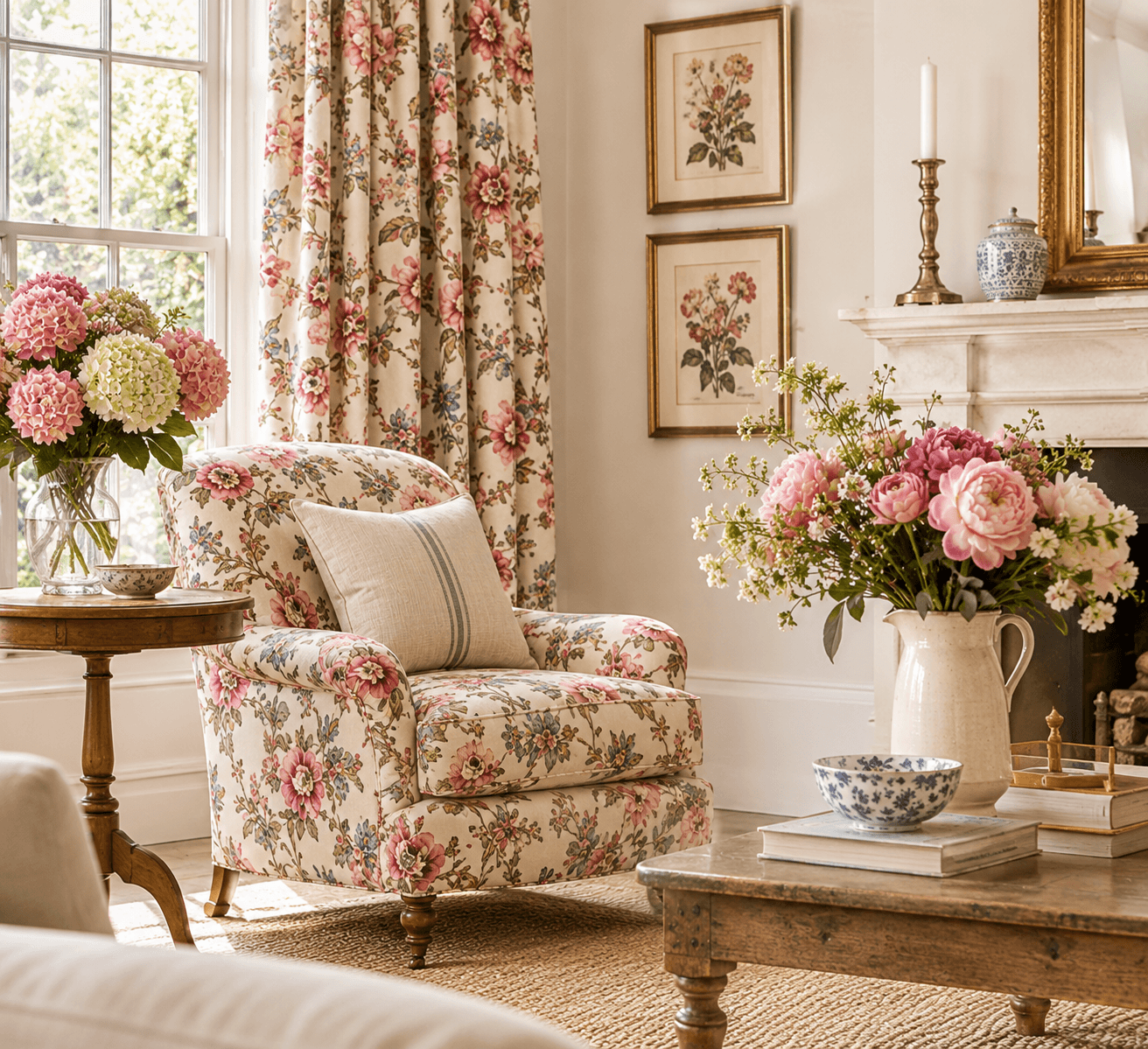
AI-generated interior inspired by traditional chintz and romantic English cottage style.
The story of chintz is one of color, craftsmanship, cultural exchange and a lasting love of flowers. From the skilled textile artisans of India to the elegant interiors of Europe, this centuries-old fabric continues to inspire a new generation of floral design.
There is something wonderfully timeless about a floral textile. A pattern of flowers and winding branches can make a room feel warm, lived-in and quietly romantic, bringing a sense of history and softness into our homes.
Few textiles embody this feeling quite like chintz. Once a highly coveted import from India, chintz transformed the way Europeans dressed and decorated their homes. Its richly colored florals, remarkable craftsmanship and decorative spirit captured imaginations centuries ago — and its appeal hasn't entirely faded.
Today, chintz is finding its way into contemporary interiors again, not necessarily in its traditional form, but through fresh interpretations that combine heritage, botanical beauty and a more relaxed approach to decorating.
The origins of chintz: A textile born in India
Long before chintz became associated with English country houses and romantic floral interiors, it was a remarkable Indian textile.
The original chintz fabrics were produced in India, particularly along the Coromandel Coast, where artisans developed sophisticated techniques for painting, printing and dyeing cotton. Using natural dyes, mordants and resist techniques, they created textiles with beautifully detailed motifs and colors that were unusually vibrant and durable for their time.
Flowers, foliage, birds, flowering trees and intricate ornamental arrangements were among the designs that made these fabrics so distinctive. Some were created using carved wooden blocks, while others were painstakingly painted by hand using a fine bamboo pen known as a kalam — a technique associated with kalamkari.
The process was extraordinarily skilled. Different mordants were used to help dyes bond with the cotton fibers, allowing artisans to create a rich palette of reds, blues, greens, yellows and other colors that could withstand washing and use.
What made these textiles so extraordinary was not only their beauty, but also their technical sophistication. Indian artisans had perfected a way of producing cotton fabrics that were colorful, decorative, relatively lightweight and practical — qualities that would soon make them irresistible to European consumers.
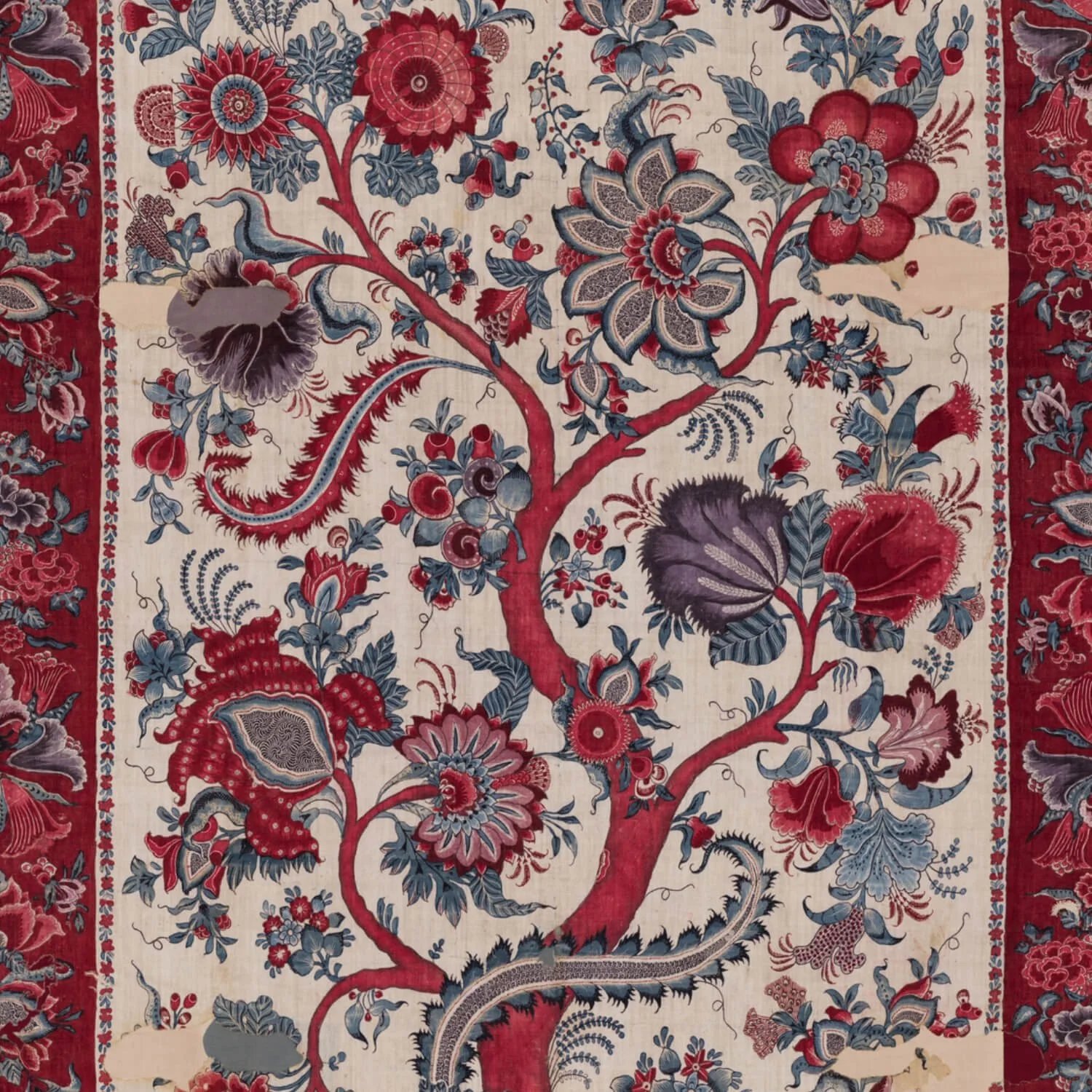
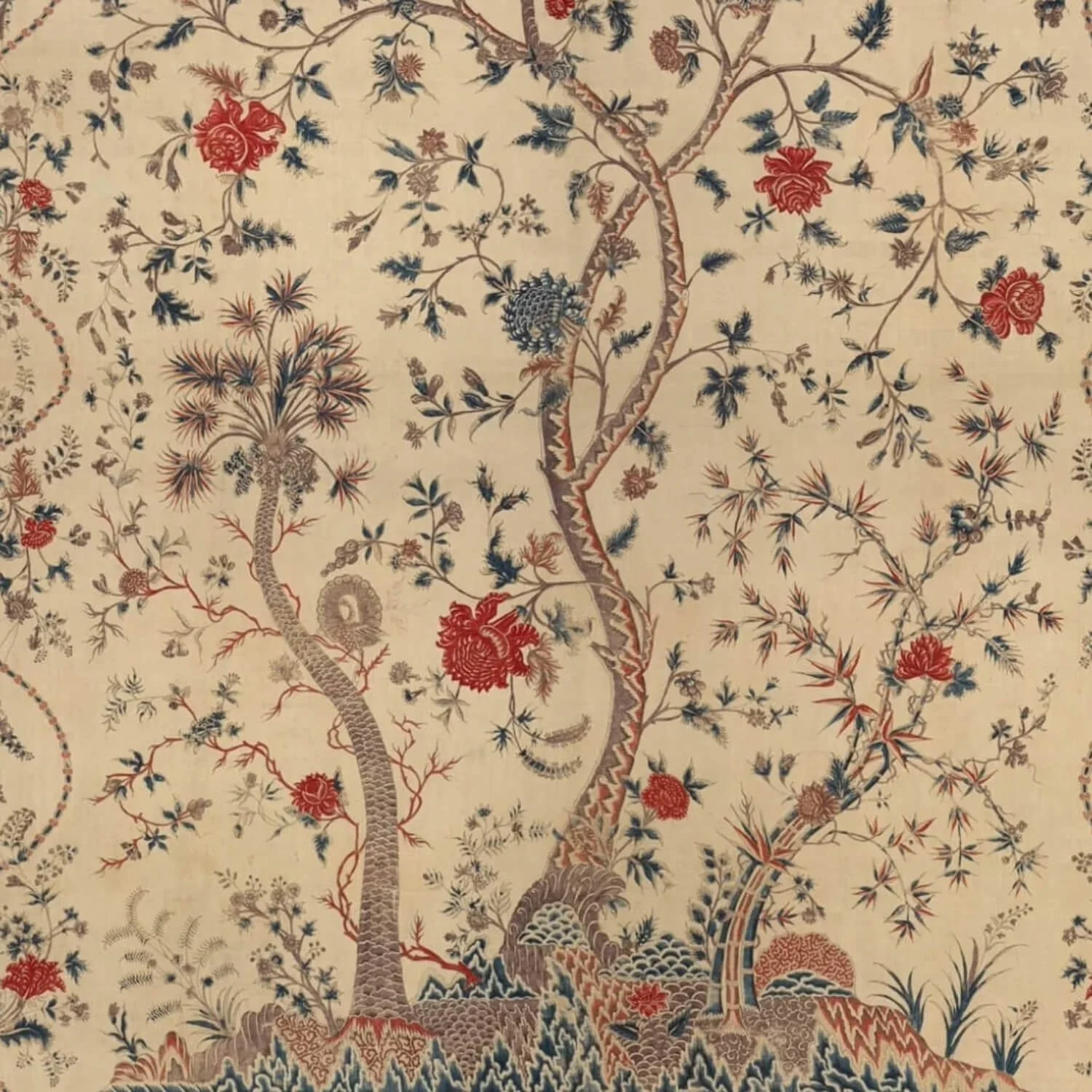
Images: metmuseum.org · Left: Palampore India (Colomandel Coast), for the Sri Lankan Market · Right: Hanging or Bed Cover
What made traditional chintz so distinctive?
Original Indian chintz was very different from the simple printed cotton fabrics that the word sometimes evokes today.
Traditional chintz was prized for its:
Rich, lasting colors created through complex dyeing processes.
Decorative floral motifs, ranging from delicate botanical repeats to elaborate flowering trees.
Hand-painted and block-printed details, often with remarkably intricate precision.
Cotton base, which made the fabrics comfortable, versatile and suitable for everyday use.
Beautifully composed designs, featuring large-scale botanical arrangements, borders and repeating patterns.
These textiles were used as bedcovers, curtains, wall hangings, upholstery and clothing. They were decorative, but they were also functional — bringing color, comfort and beauty into everyday life.
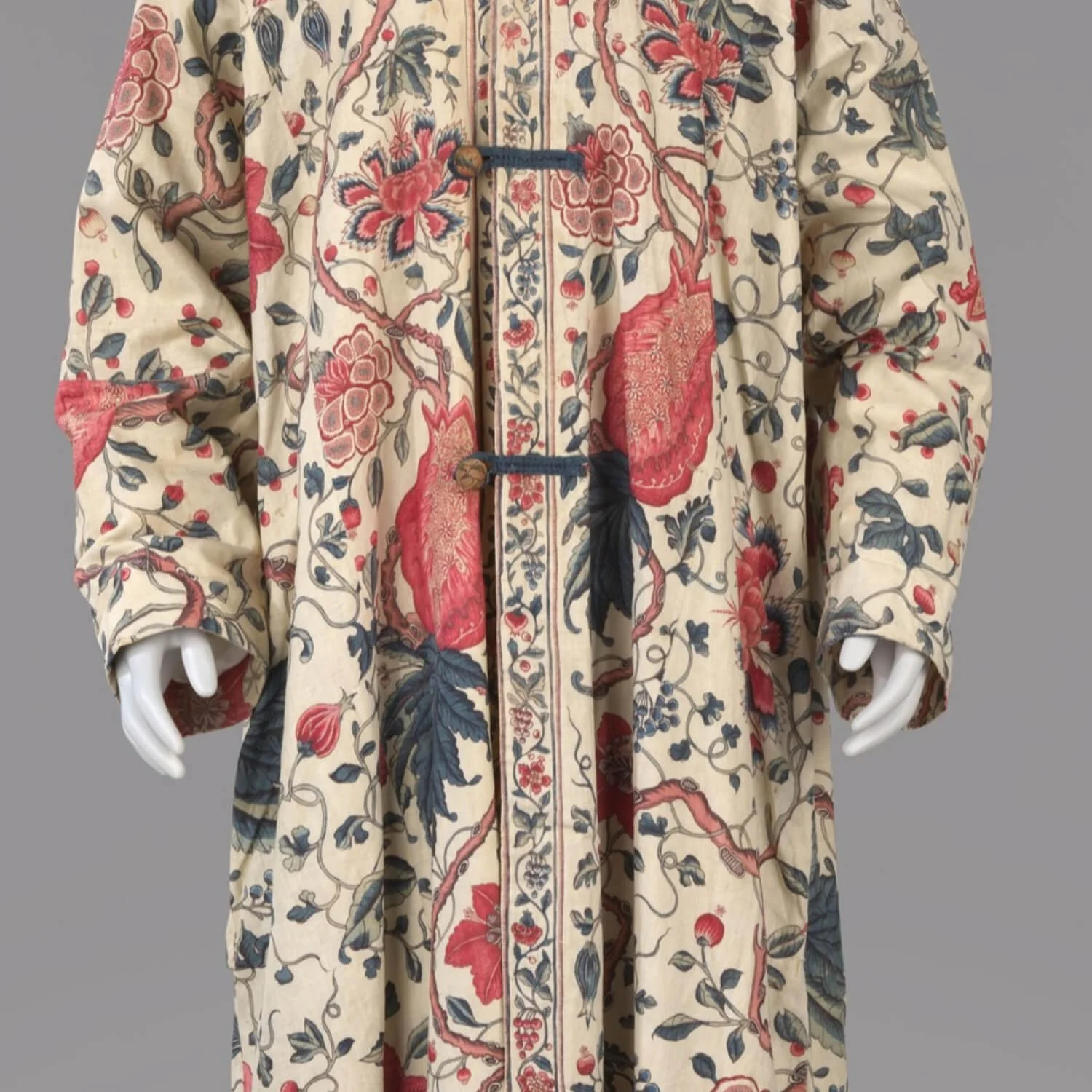
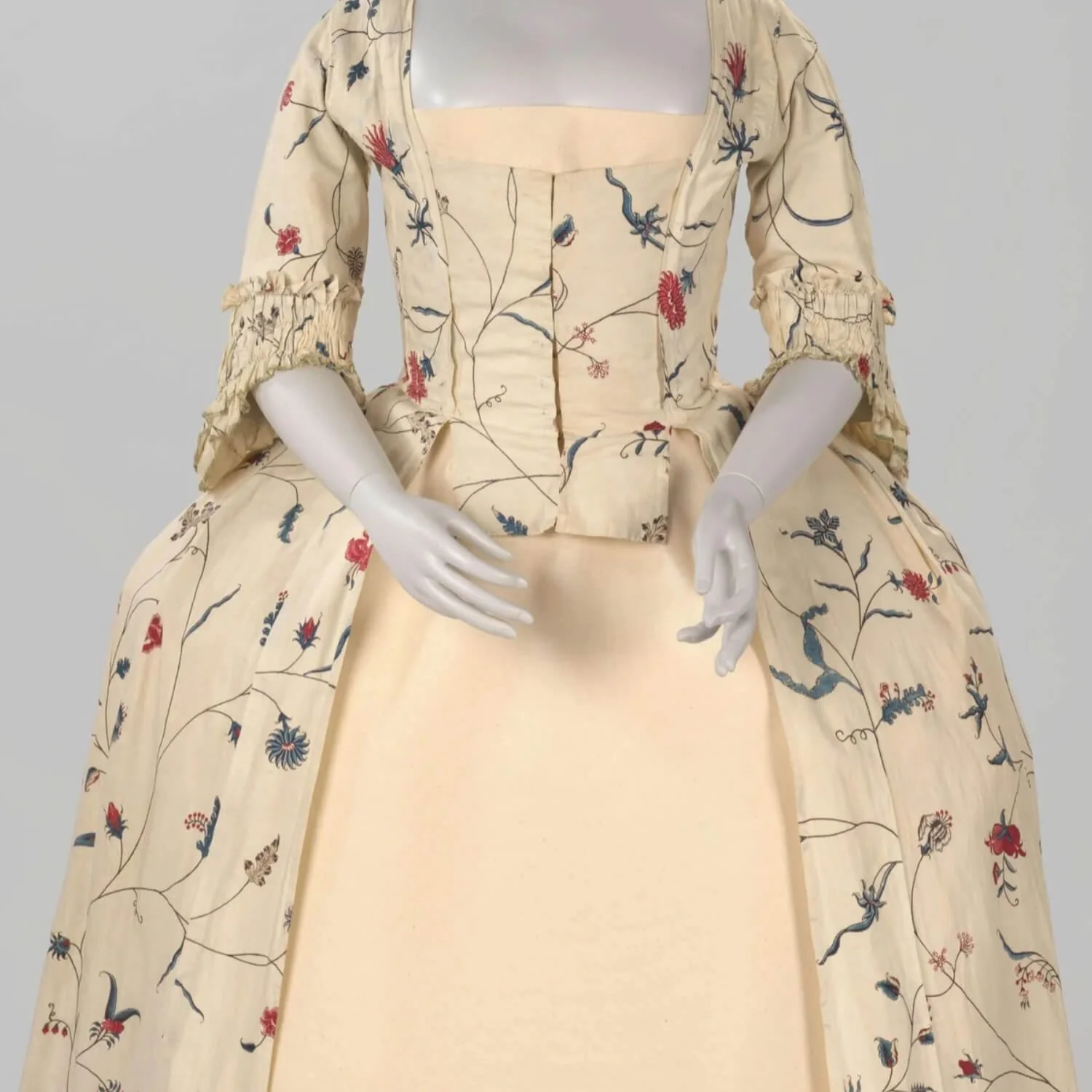
Images: Rijksmuseum, Amsterdam, the Netherlands · Left: Dressing Gown circa. 1760 - c. 1780 · Right: Chintz Sack Gown, circa 1775–1780
How chintz travelled to Europe
During the seventeenth century, European trading companies began importing increasing quantities of Indian cotton textiles. Through maritime trade routes and the East India Companies, these fabrics reached European ports, where they quickly became fashionable.
Europeans were accustomed to linen, wool and silk, but Indian cottons offered something quite different. They were lightweight, colourful, washable and decorated with patterns that felt fresh and exotic.
Chintz soon became a desirable household textile. It was used to dress beds, cover furniture, create curtains and transform interiors with colour. Floral cottons also became fashionable clothing, worn by both women and men.
The popularity of Indian textiles became so great that European textile producers began to fear the competition. Imported cottons threatened established wool, linen and silk industries, leading to restrictions and bans on chintz in England and France during the eighteenth century.
Yet the demand never truly disappeared. European manufacturers eventually began producing their own printed cottons, borrowing techniques, motifs and inspiration from Indian textiles. Over time, chintz evolved into a broader decorative tradition, shaped by both its Indian origins and the changing tastes of European interiors.
From exotic import to English country house favorite
As chintz became part of European decorating culture, its appearance and use evolved.
The bold, elaborate textiles of the early period gradually inspired softer floral designs, smaller repeats, delicate botanical arrangements and palettes suited to European interiors. Floral cottons became associated with bedrooms, country houses, upholstered furniture, curtains and the layered comfort of traditional interiors.
By the time chintz became firmly associated with English decorating, it had acquired a distinctly romantic character. Flowers, faded colors, painted furniture, antique wood, ruffled fabrics and a sense of gentle abundance all became part of the aesthetic.
This is perhaps why chintz feels so familiar today. It belongs to an idea of home that values comfort, personality, craftsmanship and the beauty of things that feel as though they have been collected over time.
Chintz in the modern home
Today, chintz doesn't have to mean a room filled with matching floral upholstery, heavy curtains and traditional furniture.
Its decorative spirit can be interpreted in much more contemporary ways. A floral pattern can be used as a statement, balanced with natural materials, simple shapes and plenty of breathing space.
Modern chintz works beautifully in interiors that embrace:
Cottage and cottagecore-inspired spaces
Romantic country interiors
Modern traditional and transitional homes
Grandmillennial decorating
Eclectic interiors with vintage and contemporary pieces
Soft, nature-inspired bedrooms and living spaces
Rather than covering every surface, a floral print can become the focal point of a room — a curtain, an accent chair, a cushion, a wallpapered wall or even a simple fabric detail that adds character without overwhelming the space.
The enduring beauty of chintz
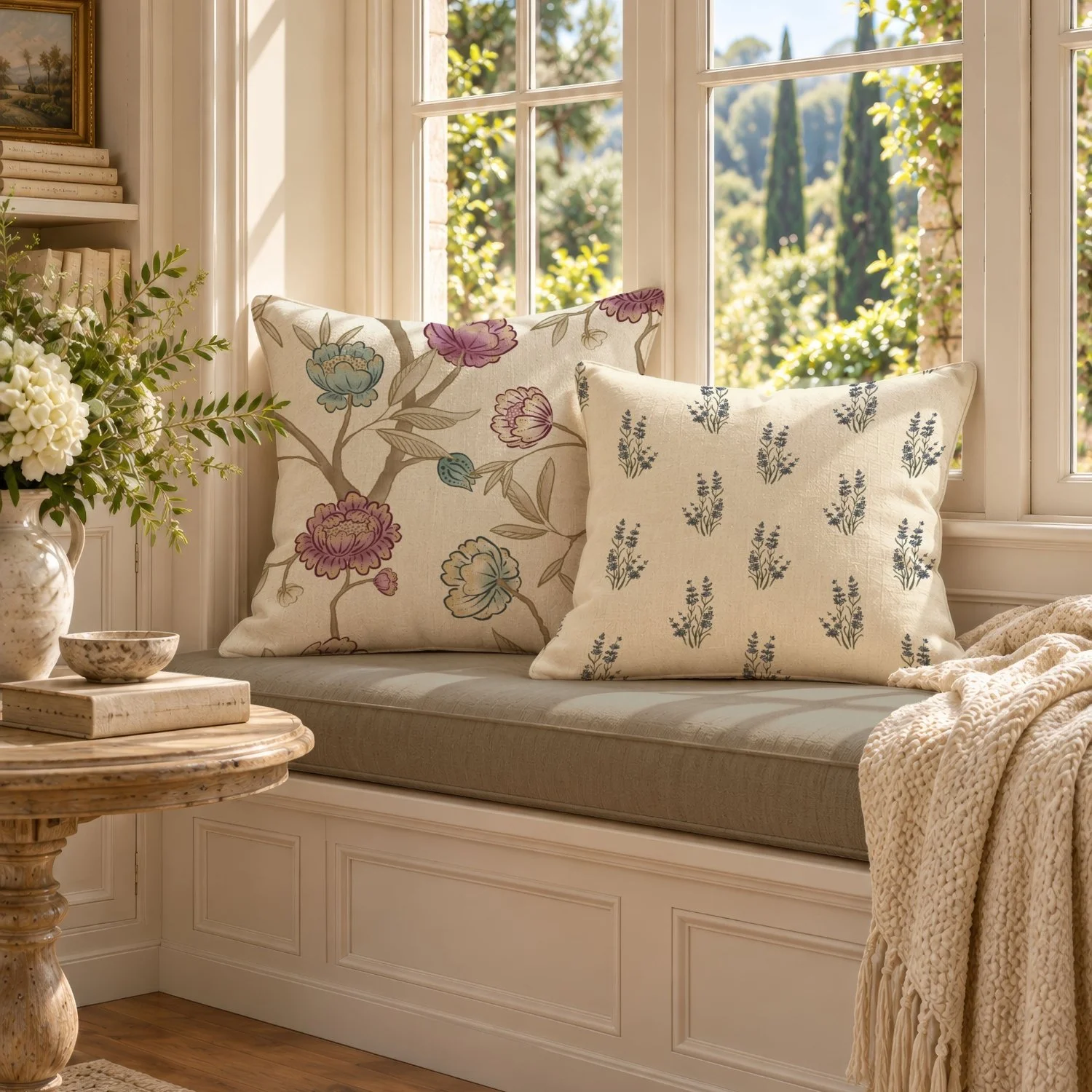
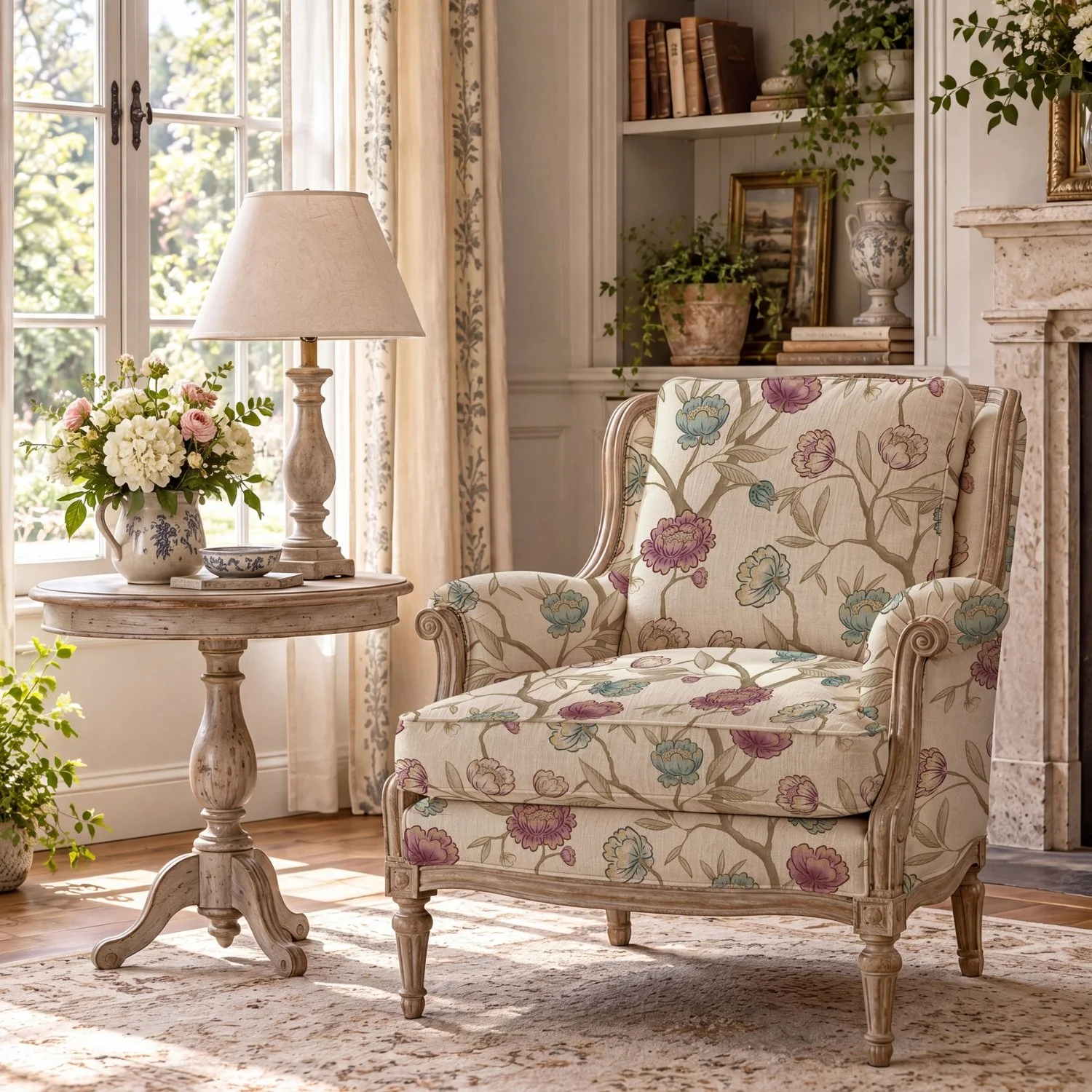
Perhaps the reason chintz continues to inspire us is that it represents more than a pattern. It is a textile tradition shaped by skilled artisans, international trade, changing fashions and centuries of creative interpretation.
Its journey from India to Europe is a reminder that design has always travelled, evolved and been reimagined. What began as a remarkable Indian craft became part of the decorative language of homes around the world.
And today, its floral spirit continues to evolve.
A modern interpretation of chintz can be delicate or bold, traditional or contemporary, nostalgic or entirely fresh. It can bring a touch of romance to an English cottage, add character to a modern home or simply remind us that surrounding ourselves with beauty is one of the pleasures of everyday living.
Because flowers, after all, never really go out of style.
Discover Romantic Chintz — a collection of floral and botanical patterns inspired by heritage textiles, cottage gardens and the timeless beauty of romantic interiors.